Combined LC-MS and qPCR analysis of authentic cumin samples to identify the botanical origin of pyrrolizidine alkaloid contamination
A research project at Justus Liebig University in Giessen and the University of Veterinary Medicine in Vienna
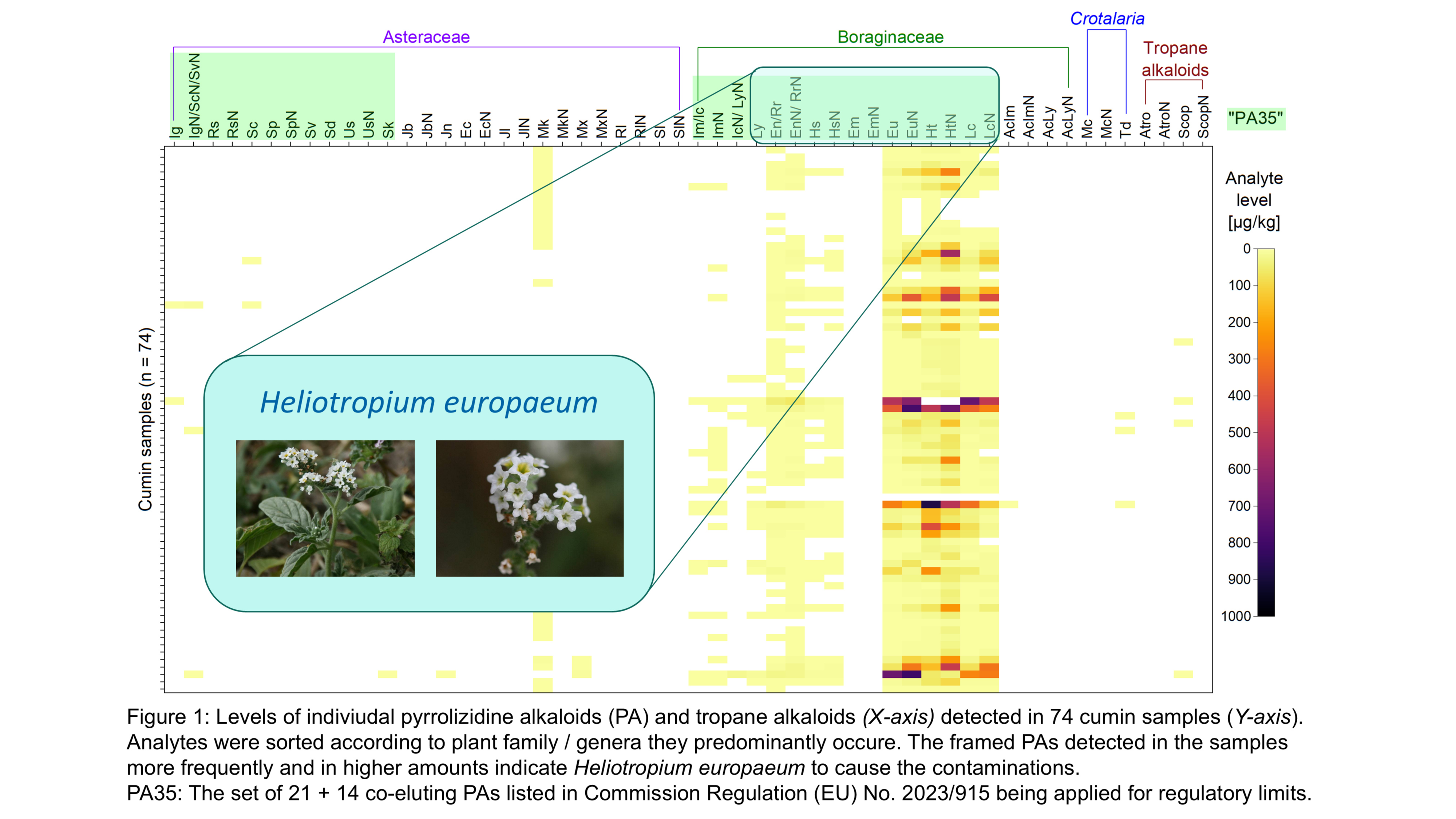
Pyrrolizidine alkaloids (PAs) and tropane alkaloids (TAs) are plant secondary metabolites that are toxic to humans and livestock. Plants that produce PAs and TAs are found worldwide and often grow as weeds in fields, including among cultivated crops. As a result, these toxins can end up in foods such as (herbal) teas, culinary herbs, and spices during harvest. Several studies have already identified oregano and, in particular, cumin as problematic sources of PA contamination, as these were frequently found to be contaminated with levels exceeding the European Union’s maximum limit. While complaints related to oregano are declining, the botanical origin of PA contamination in cumin remains largely unknown.
Tracing the botanical origin of cumin contamination
This project aimed to identify the botanical sources of contamination in cumin. A total of 74 authentic cumin samples provided by commercial vendors were analyzed (1) for the presence of 35 pyrrolizidine alkaloids (PAs) and four tropane alkaloids (TAs) using liquid chromatography–tandem mass spectrometry (LC–MS/MS), and (2) for the presence of PA-producing plants using quantitative polymerase chain reaction (qPCR). Although PAs or TAs were detected in all 74 cumin samples, approximately three-quarters of the samples had total values below the EU regulatory limit of 400 µg/kg. Unexpectedly, the detected analytes originated almost exclusively from a specific PA group found in European heliotrope. The developed qPCR method identified eight samples containing DNA from plant families known to include PA-producing plants. Subsequent sequencing of these samples revealed plant species not known to produce PAs. Accordingly, the LC–MS/MS and qPCR analyses did not show sufficient concordance. Nevertheless, the clear identification of the plant responsible for PA contamination in cumin may help manufacturers reduce future PA contamination in their products.
Justus Liebig University of Giessen, Institute of Food Chemistry and Food Biotechnology, and Ludwig Maximilian University of Munich, Faculty of Veterinary Medicine, Chair of Food Safety and Analytics
Principal Investigator: Dr. Florian Kaltner
University of Veterinary Medicine Vienna, Center for Food Science and Veterinary Public Health, Division of Food Hygiene and Technology
Principal Investigators: Dr. Samart Dorn-In and Prof. Dr. Karin Schwaiger
Download